
The Best Assignment Due Date Tracker Tools Compared
An assignment due date tracker is a tool — digital or physical — that helps you log, organize, and monitor all your academic deadlines in one place. Here are the top options worth your time in 2026:
| Tool | Best For | Cost |
|---|---|---|
| Google Sheets | Full customization, visual layout | Free |
| Notion | Flexible workflows, linked databases | Free / Paid |
| Asana | Team or class collaboration | Free / Paid |
| Microsoft Excel | Offline, structured templates | Free templates |
| Assignment Tracker: Timetable | Mobile-first, iOS students | Free / $9.99/year |
| DeadlineKeeper | College application deadlines | Free / $9/month |
| Coda | Simple, minimal setup | Free |
| Browser-based trackers | No account needed, quick use | Free |
Missing a deadline doesn’t just cost you points — it costs you sleep, confidence, and momentum. For busy students juggling multiple courses, part-time jobs, and everything in between, one forgotten due date can spiral fast.
The problem isn’t laziness. It’s scattered information. Assignments live in emails, syllabi PDFs, class portals, and the back of your memory. No single system ties it all together — until you build one.
That’s exactly what an assignment due date tracker does. It pulls everything into one view so you always know what’s due, when, and how much time you have left.
The options range from free spreadsheet templates to AI-powered apps that remind you, coach your essays, and even find scholarships. The right tool depends on how you work — and what you’ll actually stick with.
This guide breaks down the best options available in 2026, so you can pick one and start using it today.
Why You Need an Assignment Due Date Tracker in 2026
In 2026, the academic landscape is more digital and than ever. We’ve all been there: it’s 11:00 PM on a Sunday, and you suddenly remember a 1,500-word essay due at midnight. That “last-minute panic” is a productivity killer. An assignment due date tracker isn’t just a list; it’s a strategic defense against academic burnout.
Research shows that using structured tracking tools can significantly boost performance. For example, teams using templates in platforms like Asana have reported a 30% faster turnaround time for drafts. When you apply that same logic to your studies, you aren’t just finishing work; you’re finishing it better and faster.
Beyond just hitting deadlines, these trackers provide:
- GPA Improvement: By visualizing the weight of each assignment, you can prioritize high-value tasks that have the biggest impact on your grades.
- Workload Visualization: Seeing your whole semester at once helps you identify “hell weeks” before they happen, allowing you to start early.
- Mental Clarity: Once a deadline is recorded in your tracker, your brain can stop using energy to “remember” it and start using energy to “solve” it.
- Accountability: It’s harder to ignore a deadline when it’s staring at you in bright red on your dashboard.
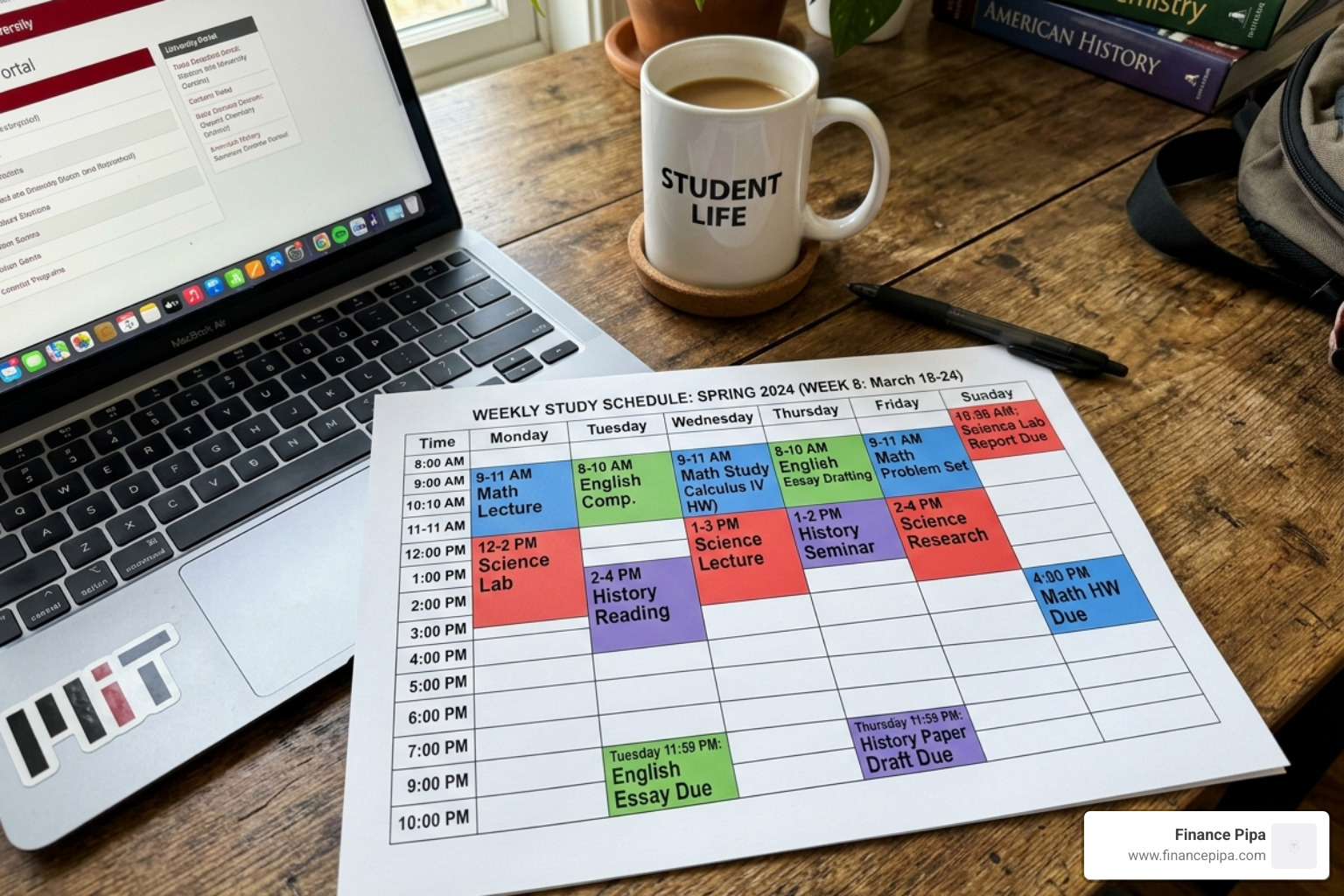
For those who need a little extra spark to get started, Visual inspiration for assignment tracking can show you how other students use aesthetic layouts and color-coding to make organization feel less like a chore and more like a lifestyle.
Essential Features of a Modern Assignment Due Date Tracker
Not all trackers are created equal. In 2026, a simple sticky note doesn’t cut it. When we evaluate a assignment due date tracker, we look for features that actually reduce friction.
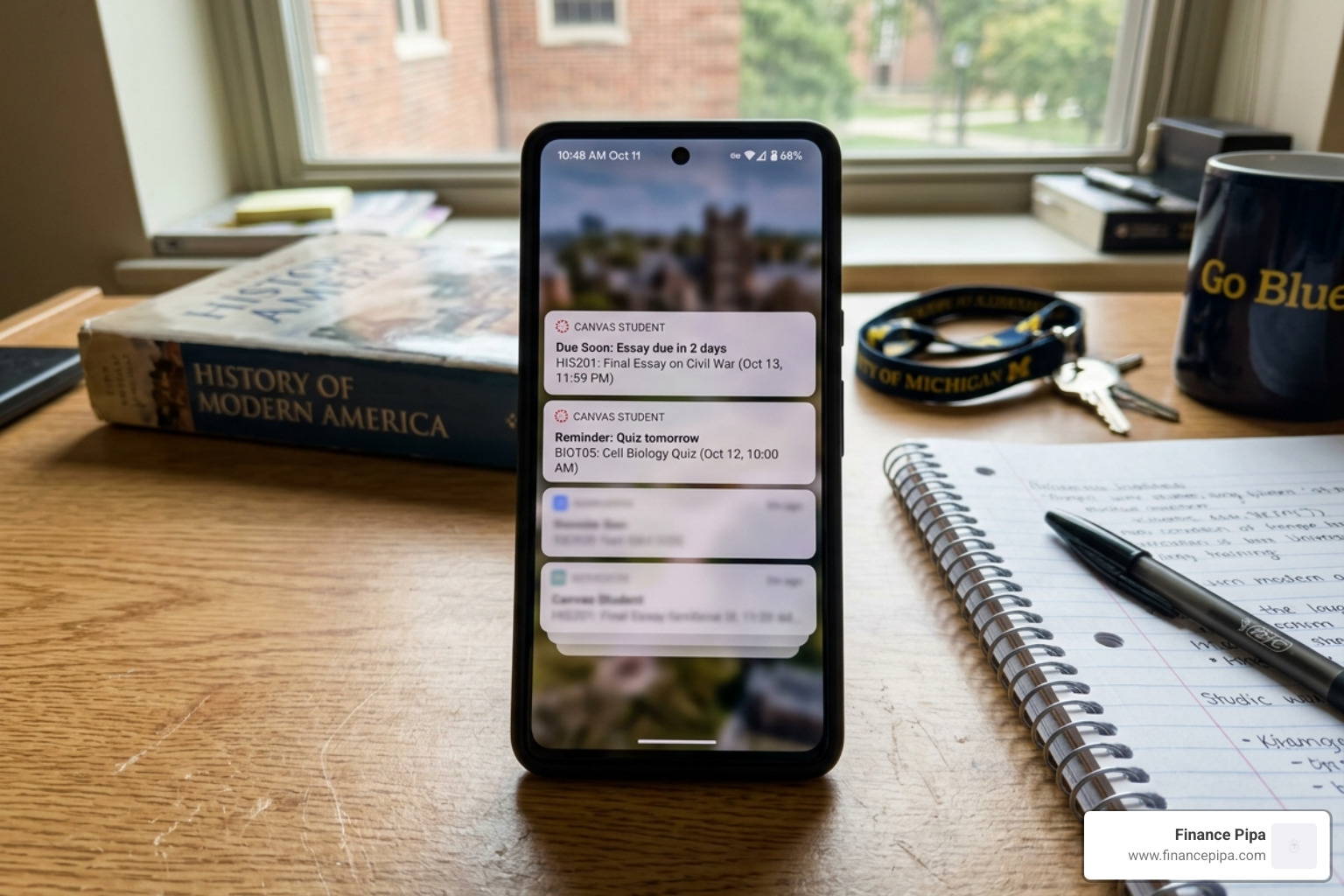
- Automated Reminders: Your tracker should nudge you. Whether it’s a push notification on your phone or an email, smart reminders are essential.
- Color-Coded Urgency: Visual cues are everything. A good system uses “traffic light” colors: Red for overdue or due today, Yellow for upcoming, and Green for completed.
- Progress Bars: Seeing a bar move from 0% to 100% provides a dopamine hit that keeps you motivated.
- Custom Fields: You need to track more than just the date. Look for fields for “Subject,” “Assignment Type” (is it a quiz or a final?), and “Priority.”
- Grade Weight Calculation: Some advanced trackers allow you to input what percentage of your final grade an assignment is worth. This helps you decide if you should spend three hours on a 2% worksheet or a 20% project.
- Privacy and Local Storage: Especially with browser-based tools, look for options that save data locally. This ensures your academic schedule isn’t being sold to third parties.
Setting Up Your Assignment Due Date Tracker for Success
The most common mistake students make is setting up a tracker and then never touching it again. To make it work, you need a system.
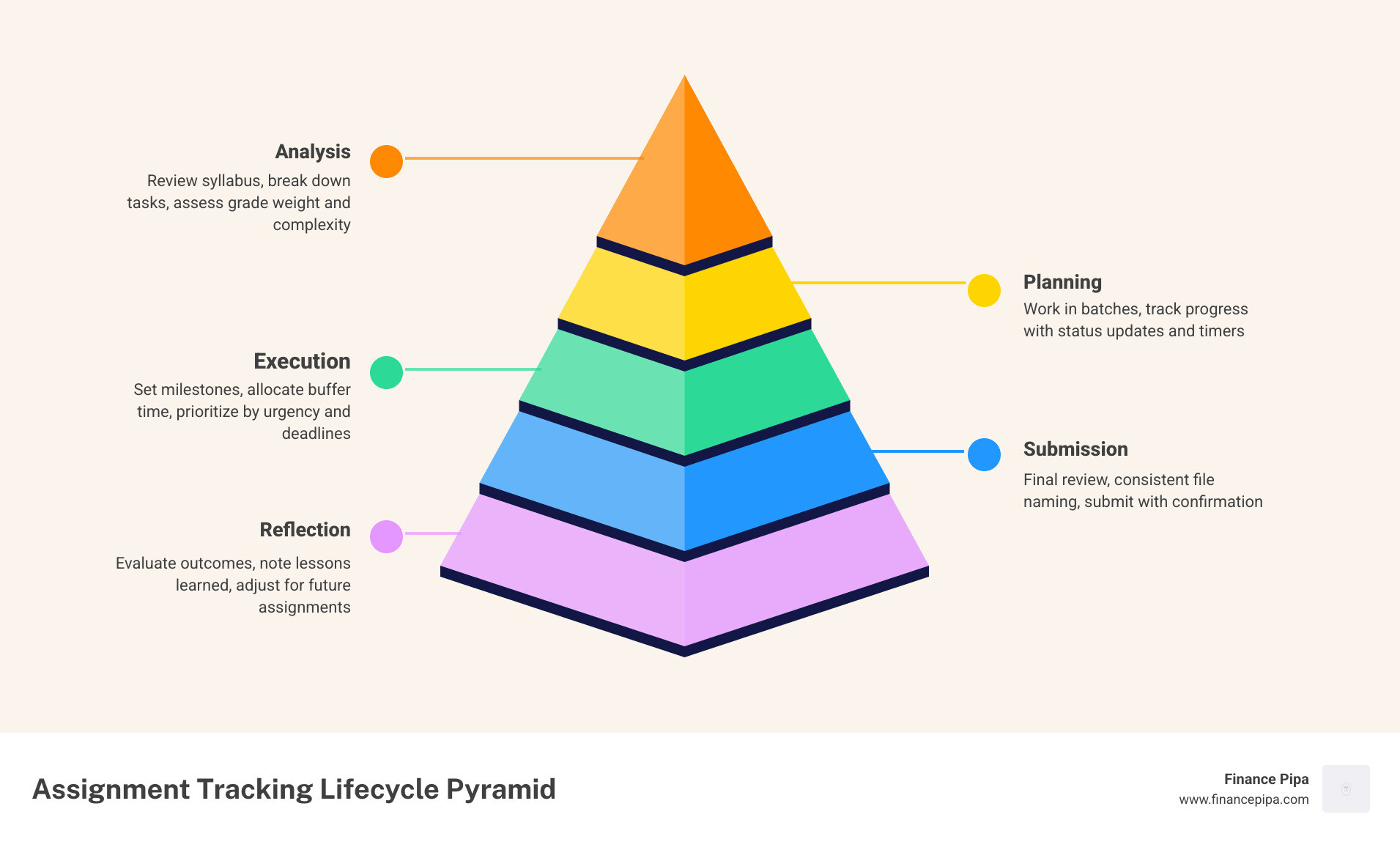
First, Syllabus Integration is key. The moment you get your syllabi at the start of the semester, block out two hours to input every single date into your assignment due date tracker. Don’t wait for the professor to mention it in class.
Second, use the 25% Buffer Rule. If you think a research paper will take you 10 hours, schedule it as if it will take 12.5. Life happens—Wi-Fi goes down, you get a cold, or a friend visits unexpectedly. That buffer is your safety net.
Third, implement Priority Classification. We recommend a simple threshold based on grade weight:
- High Priority: Assignments worth >15% of your grade.
- Medium Priority: Assignments worth 5-15% of your grade.
- Low Priority: Assignments worth <5% of your grade (like daily homework).
Finally, use Backward Planning. Instead of just marking the due date, work backward from that date to set “mini-deadlines” for research, drafting, and proofreading. This prevents the dreaded all-nighter.
Leveraging AI for Enhanced Deadline Management
Welcome to the future of studying. In 2026, AI has moved beyond just writing essays; it’s now your personal project manager. Modern assignment due date tracker tools are increasingly incorporating AI to help you work smarter, not harder.
AI can now provide Predictive Workload Analysis. By looking at your upcoming deadlines, an AI-integrated tracker can warn you: “Hey, you have three exams and a paper due in Week 12. You should start the paper in Week 9 to stay on track.” This kind of foresight is something a static spreadsheet just can’t offer.
Tools like DeadlineKeeper — College Application Deadline Tracker & AI Assistant | DeadlineKeeper take this even further. They don’t just track dates; they use AI to review essay drafts for clarity and impact. Some even feature voice assistants, allowing you to ask, “When is my next stats quiz?” while you’re cooking dinner.
AI can also help with Smart Task Prioritization. If you’re feeling overwhelmed, an AI assistant can look at your list and suggest the most efficient order to tackle your tasks based on difficulty, due date, and your personal energy levels.
Frequently Asked Questions about Assignment Due Date Trackers
How do I integrate my tracker with other digital tools?
A tracker that lives in a vacuum is easy to forget. The best systems sync across your entire digital life.
Most top-tier trackers, including Assignment Tracker Templates | Notion Marketplace , allow for seamless integration with Google Calendar, Apple Calendar, and Outlook. This means your assignment deadlines appear right alongside your social plans and work shifts.
If you prefer a manual but robust method, you can follow A Step-by-Step Guide to Creating a Google Sheet Assignment Tracker which explains how to use CSV exports to move your data into other platforms. Many students also use Slack or Discord integrations to get automated pings when a deadline is 24 hours away.
Are digital assignment trackers secure for student data?
Security is a valid concern. When choosing a assignment due date tracker, check the developer’s privacy policy. Many dedicated apps now use bank-level encryption to protect your data.
If you are particularly privacy-conscious, look for “session-based” or “local storage” tools. These tools save your data directly to your browser or device rather than a cloud server. For example, some Free Deadline Tracker | With Google Calendar Integration tools only store data for your current session unless you choose to export it to your own secure calendar.
Can I use these trackers for non-academic projects?
Absolutely! The logic of an assignment due date tracker—breaking down big goals into dated tasks—applies to almost everything.
- College Applications: Track FAFSA deadlines, recommendation letter requests, and essay prompts.
- Personal Finance: Set reminders for bill payments, scholarship application windows, and tax filings.
- Internships and Jobs: Manage project deliverables and meeting preparations.
- Personal Goals: Whether it’s training for a 5k or finishing a reading list, a tracker keeps you honest.
Conclusion
At the end of the day, an assignment due date tracker is more than just a calendar—it’s a tool for reclaiming your time and peace of mind. Whether you choose the infinite customization of a Google Sheet, the aesthetic appeal of a Notion dashboard, or the AI-powered assistance of a dedicated app, the best tool is the one you will actually use.
At Finance Pipa, we believe in integrated study productivity. Our suite of tools—including Notes, Focus, Planner, and Revision—is designed to work alongside your tracking system to help you achieve more with less stress. By combining a solid deadline tracker with deep-focus techniques, you aren’t just surviving the semester; you’re mastering it.
Ready to take control of your schedule? Try a student productivity template today and see how much easier academic life can be when you have a plan.
